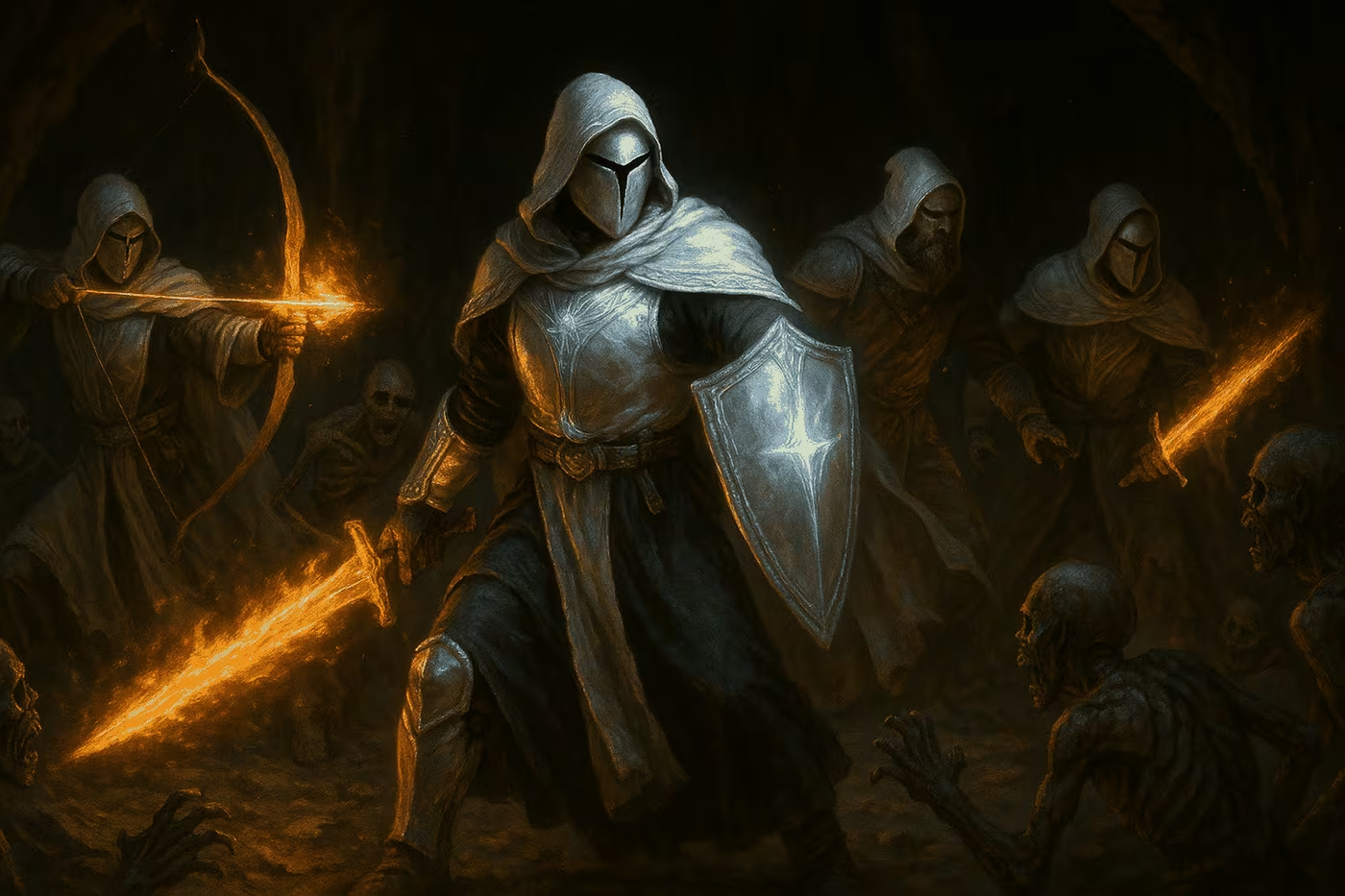
    Sacred Grimdark

    Grimdark fantasy where the sacred survives the ruin.

    Et lux in tenebris lucet, et tenebrae eam non comprehenderunt.
    Vulgate · Iohannem 1:5

    Origin of the Genre

    Sacred Grimdark is a fantasy genre created by author T.L.L. Quick, born from a single haunting question:

    "What does holiness look like when the world is burning?"

    Where traditional grimdark often erases hope and moral anchors, Sacred Grimdark holds to a truth older than despair: light does not escape darkness—it burns within it. The sacred is not absent; it is besieged, bloodied, and fiercely costly.

    This genre first took shape in The Chronicles of the Archangels: a saga where angels can fall, demons remember mercy only to hate it, and every oath carries eternal consequence.

    How Sacred Grimdark Differs from Grimdark

    1. The Sacred Endures Inside the Horror

    Grimdark often strips away the divine or any trustworthy moral centre. Sacred Grimdark keeps the Most High present—even when heaven feels silent. Priests doubt, prophets ache, and saints bleed, but the sacred presence has not abandoned the battlefield.

    2. Evil Is Never Glorified

    Demons, fallen angels, and corrupted powers are terrifying, ancient, and utterly untrustworthy. They do not become quirky allies. They exist to devour, deceive, and destroy the children of the Most High.

    3. The Stakes Are Eternal

    In Sacred Grimdark, choices echo beyond the grave. Souls, vows, mercy, and judgment are not metaphors—they are the terrain of the war.

    4. Redemption Is Possible—but Never Cheap

    Some fall and never rise. Others stagger towards the light through ash, loss, and sacrifice. Grace is real, but it is not sentimental. It scars.

    5. The Atmosphere Is Both Holy and Haunted

    Cathedrals cracked by siege, relics humming with dangerous power, libraries that listen, dwarven halls of grief, Handii watching from the shadows—this is a world where every stone remembers a prayer or a betrayal.

    Core Themes of Sacred Grimdark

    • Faith under siege
    • Holiness inside horror
    • Light that refuses to die
    • Fallen angels and broken vows
    • The cost—and possibility—of redemption
    • Sacred oaths and cursed relics
    • The war for the human soul

    The Chronicles That Defined the Genre

    Sacred Grimdark began in the world of Milieu, in the five-book saga The Chronicles of the Archangels. Each volume presses deeper into the tension between judgment and mercy.

    Book I — Betrayal

    Where the fall begins.

    The first breach. Priests called to guard the sacred discover how quickly faith can be weaponized—and how far an archangel can fall.

    Book II — Nightmare

    Where the darkness learns your name.

    Dream-warfare, unraveling bonds, and the long silence of the Most High. Here, Sacred Grimdark takes the battlefield into the mind and soul.

    Book III — Redemption

    Where every soul is weighed.

    The path back from ruin is narrow and paid in blood. Some are restored. Some are lost. All are measured by a holiness that will not lie.

    What Comes Next

    Book IV — Darkness

    Where the keep itself begins to yield.

    The Basilica that should have resisted does not. The Library receives what it cannot welcome. Witness, not comfort.

    Book V — Judgment

    The final reckoning.

    Coming soon. The saga's last weight, where every measure taken is at last returned.

    The Sacred Grimdark Manifesto

    Let readers walk through ruin with a candle that refuses to go out. Let them hear the bell of judgment in the dark. Let them feel the tug-of-war between damnation and grace.

    Let every choice carry the weight of eternity. Let the sacred stand in the ashes, not untouched—but unbroken.

    The Scriptorium

    Essays on the bones, blood, and theology of Sacred Grimdark.

    Sacred Grimdark vs Grimdark — What Sets the Subgenre Apart

    Classic Grimdark — Abercrombie, Erikson, the long shadow of Warhammer — is defined by moral exhaustion. Heroes are unreliable, gods are absent or cruel, and the universe owes nothing. Sacred Grimdark begins in the same ruined world, but does not end there. Holiness still exists. It is wounded, hunted, often outnumbered — but it has not been killed, and it refuses to be.

    Where Grimdark says nothing is sacred, Sacred Grimdark answers: then why does the darkness still hate the light? The genre keeps Grimdark's honesty about suffering, betrayal, and the cost of war — and adds back the one element modern dark fantasy has been allergic to: reverence. Faith here is not a comfort. It is a weight that breaks most who carry it.

    The Chronicles of the Archangels was written into this gap. Twelve anointed men, chosen by the Most High, fall to ambition and hunger. The series asks the question Grimdark cannot ask without flinching: what does it cost a holy man to remain holy when heaven goes silent?

    Why Theology Belongs in Dark Fantasy

    For two decades, fantasy has treated theology as decoration — a pantheon to name-drop, a cathedral to burn down in act one. Sacred Grimdark treats it as load-bearing. If a world has archangels, those archangels must mean something. If a man is anointed, the anointing must be able to be betrayed. Otherwise the stakes are scenery.

    Real theology gives dark fantasy something nihilism cannot: a fall that matters.A villain who was once chosen is more terrifying than one who was always wicked. A hero who remembers grace is more dangerous than one who never knew it. Kristov Abhorn works as an antagonist because the reader can feel what he gave up.

    Theology is not the opposite of grimdark. It is the only thing dark enough to hold its weight.

    The Twelve Marks of a Sacred Grimdark Story

    A working field-guide for readers, reviewers, and writers wondering whether a book belongs to the subgenre. A Sacred Grimdark story tends to carry most of these marks:

    1. The sacred is real, and it can be wounded.
    2. Faith costs something — often everything.
    3. Evil is ancient, patient, and theologically literate.
    4. Heroes are anointed before they are competent.
    5. A fall from grace is treated as tragedy, not freedom.
    6. Angels remember wrath. So does the reader.
    7. Scripture, prophecy, or holy text moves the plot.
    8. Holiness is not safety. It is a target.
    9. Redemption is offered, but never cheap.
    10. The world is broken, but not abandoned.
    11. Beauty and horror share the same page.
    12. The light survives the chapter — barely.

    Where to Begin

    If you crave worlds where faith bleeds, heroes break, evil is ancient, angels remember wrath, and redemption still burns, you have found what Sacred Grimdark was made for.

    Begin with Book I, or step through the doors of the Basilica and the Goat's Breath Pub.